Why is biodiversity important? (And what happens when we lose it)
Walk through the Daintree Lowland Rainforest, and you'll pass more species in a single kilometre than most ecosystems hold in their entirety, towering trees, epiphytes, fungi, insects, frogs, birds and mammals, all interdependent in ways scientists are still discovering. That richness has a name: biodiversity. Here's what it means, why it matters, and what's at stake when it disappears.
What is biodiversity?
Biodiversity, short for biological diversity, refers to the full variety of life in a given place: every species of plant, animal, fungus and microorganism, the genetic differences within those species, and the ecosystems they form together. A simple biodiversity definition is the variety of living things in the world, or in a particular habitat, and the complex web of relationships between them.
Biodiversity exists at three levels:
- Genetic diversity — the variation within a species that helps it adapt to disease, climate shifts and other pressures.
- Species diversity — the range of different species living within an ecosystem.
- Ecosystem diversity — the variety of habitats, from rainforest to reef, each supporting different combinations of life.
The Daintree is one of the most biodiverse regions on Earth for its size. It's home to roughly a third of Australia's frog, marsupial and reptile species, and around half of the country's bird and butterfly species, all within an area that covers a fraction of one per cent of the continent's landmass.
Why is biodiversity important?
The importance of biodiversity comes down to one core idea: healthy ecosystems depend on many different species doing many different jobs. Each plant and animal plays a role, pollinating flowers, dispersing seeds, controlling pest populations, filtering water or breaking down nutrients. Remove enough of those roles, and the whole system starts to lose the ability to function.
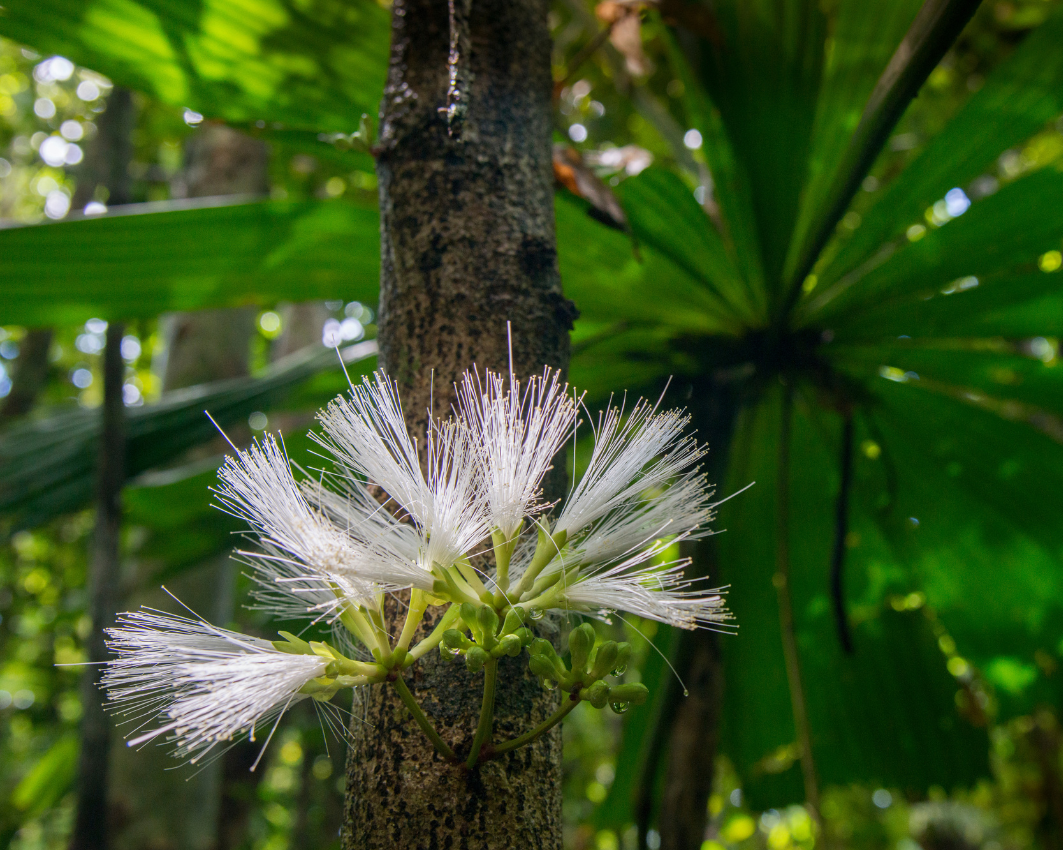
The Lace Flower (Archidendron ramiflorum). Image: Steven Nowakowski
Biodiversity also underpins the things people rely on directly: clean water, pollinated crops, fertile soil, flood regulation and even new medicines, many of which have been discovered in rainforest plants. A rainforest isn't just scenery; it's infrastructure that the planet, and everyone on it, depends on.
How does biodiversity help an ecosystem?
So what role does biodiversity play in an ecosystem, practically speaking? Diversity is what gives an ecosystem its resilience. A rainforest with many species can usually absorb a shock, a disease outbreak, a bushfire, an unusually dry season, because other species can partially fill the gaps left behind. A simplified ecosystem, with only a few species remaining, has far less capacity to recover.
In the Daintree, this plays out in countless small partnerships. The Southern Cassowary, for example, is often called a keystone species because it's one of the only animals large enough to eat and disperse the seeds of certain rainforest fruits, some of which won't germinate any other way. Lose the cassowary, and you risk losing the trees that depend on it too, along with everything those trees support in turn.
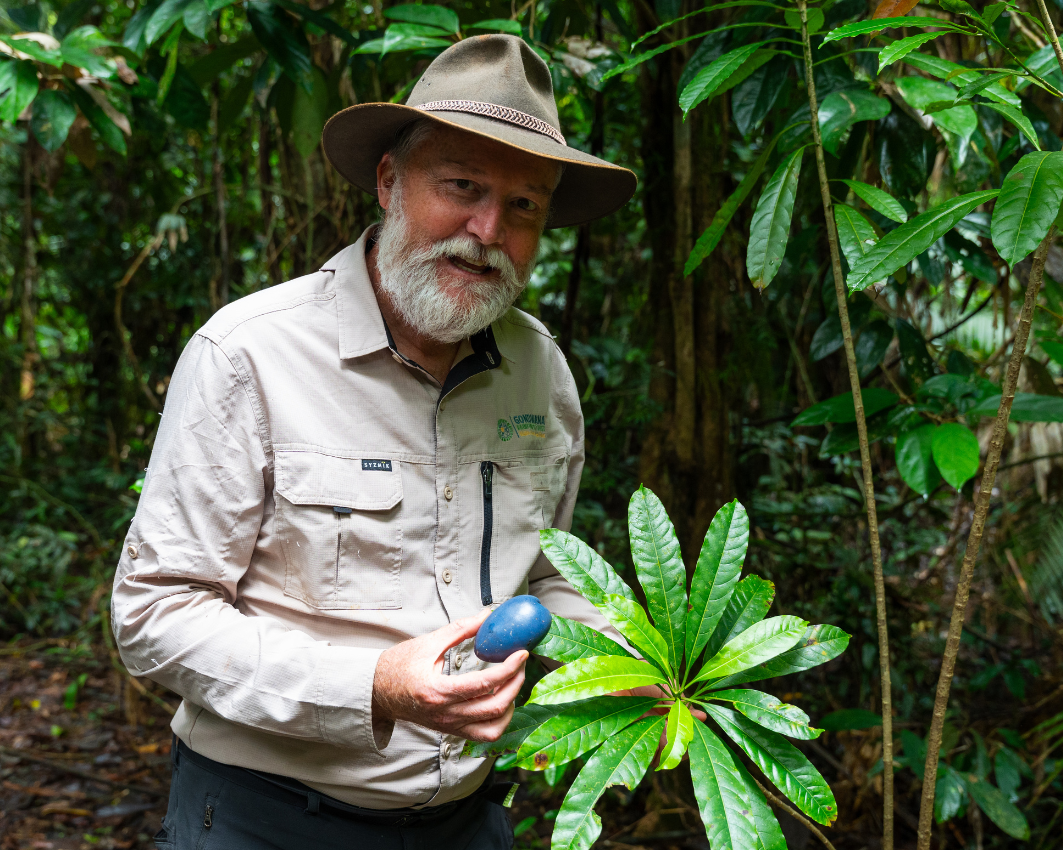
The Cassowary Plum's primary seed disperser is the Southern Cassowary.
What happens when we lose biodiversity?
Biodiversity loss rarely happens as a single dramatic event. More often, it's the slow erosion of habitat, a rainforest cleared lot by lot, a river system fragmented, a wetland drained, until the web of relationships that held an ecosystem together starts to unravel.
The consequences compound. Fewer pollinators means fewer fruiting plants. Fewer fruiting plants means less food for the animals that once dispersed their seeds. Soil erodes without root systems to hold it. Waterways silt up without healthy riparian vegetation to filter them. What once looked like the loss of "just" a few species can, over time, undermine the resilience of an entire landscape, including its capacity to support the people who live alongside it.
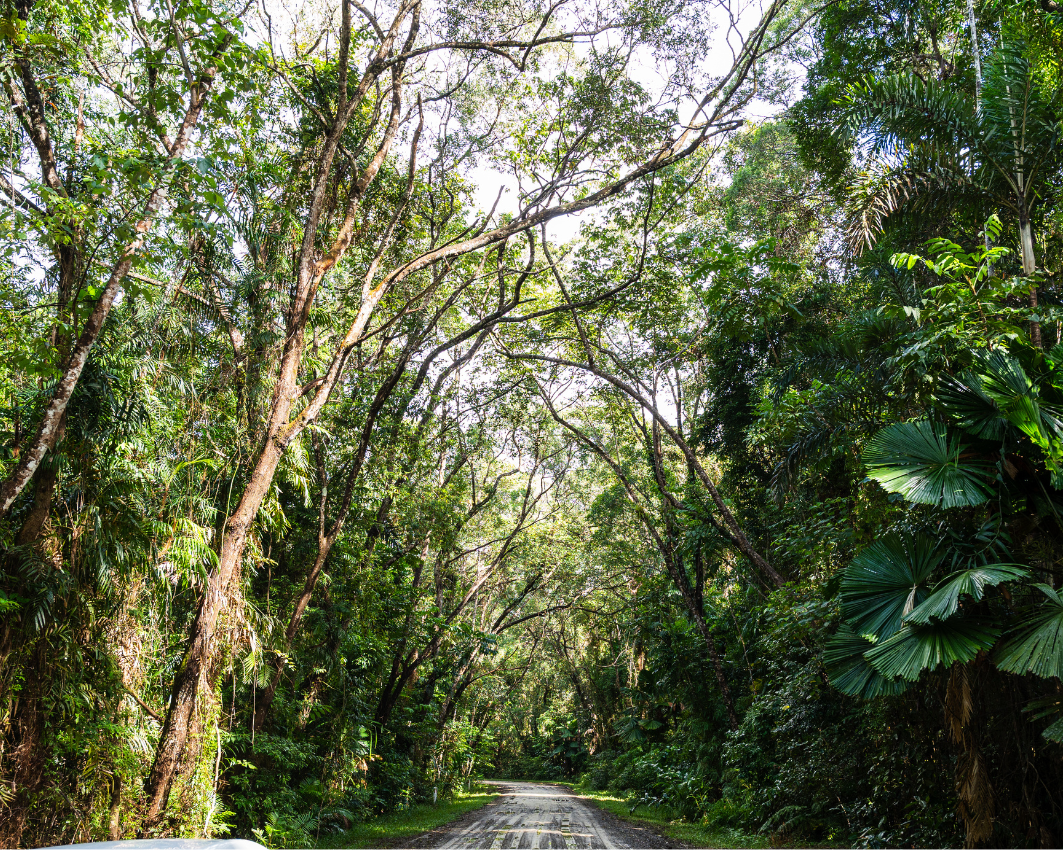
Roads fragmenting the Daintree rainforest.
The Daintree's history is a case in point. Since it was subdivided into more than 1,100 freehold lots in 1982, patches of irreplaceable lowland rainforest have been progressively cleared for development, fragmenting habitat corridors that species like the Southern Cassowary and Bennett's Tree-kangaroo depend on to move, feed and breed.
Ways to protect local biodiversity
Protecting biodiversity doesn't require grand gestures; it requires consistent, practical action at both the individual and landscape level:
- Protect and restore habitat. Intact, connected habitat is the single biggest factor in whether species survive.
- Support revegetation and wildlife corridors. Reconnecting fragmented patches of forest allows species to move, feed and breed safely.
- Reduce pressure on ecosystems. Responsible land management, weed control and reducing pollution all ease pressure on already-stressed habitats.
- Fund direct land protection. Purchasing and permanently protecting at-risk land removes the threat of clearing altogether, arguably the most durable way to safeguard biodiversity for the long term.
What we do
At Gondwana Rainforest Trust, our approach to biodiversity and conservation is direct. Under our Save the Daintree program, we purchase remaining unprotected rainforest lots in the Daintree and transfer them into permanent protection, taking them off the market and out of reach of future development for good.
Every property protected keeps another piece of habitat connected, for the Southern Cassowary, the Bennett's Tree-kangaroo, and the thousands of lesser-known species that rely on intact lowland rainforest to survive. Every $5 donated protects one square metre of rainforest.