Mountain Frog Program Success
We are delighted to share some inspiring news for Gondwana Rainforests: the successful release of the Red and Yellow Mountain Frog (Philoria kundagungan) — a milestone for conservation and for all of us committed to protecting these precious ecosystems.
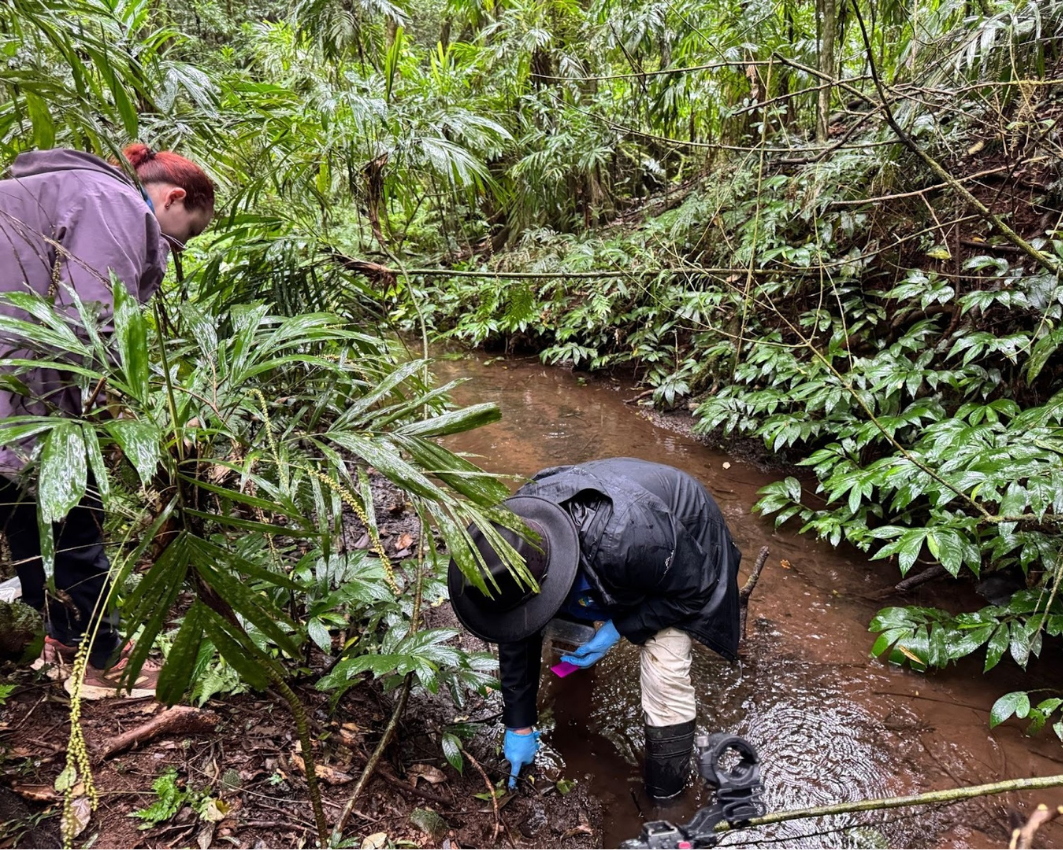
Image credit: Southern Cross University, 2025
Recently, scientists from Southern Cross University's Project GRASP (Gondwana Rainforest Amphibian Survival Program) released captive-bred frogs into a secure, predator-free enclosure in Tooloom National Park, near the New South Wales–Queensland border. This is the first time captively reared mountain frogs have been reintroduced into their highland rainforest home, marking a decade of dedicated research.
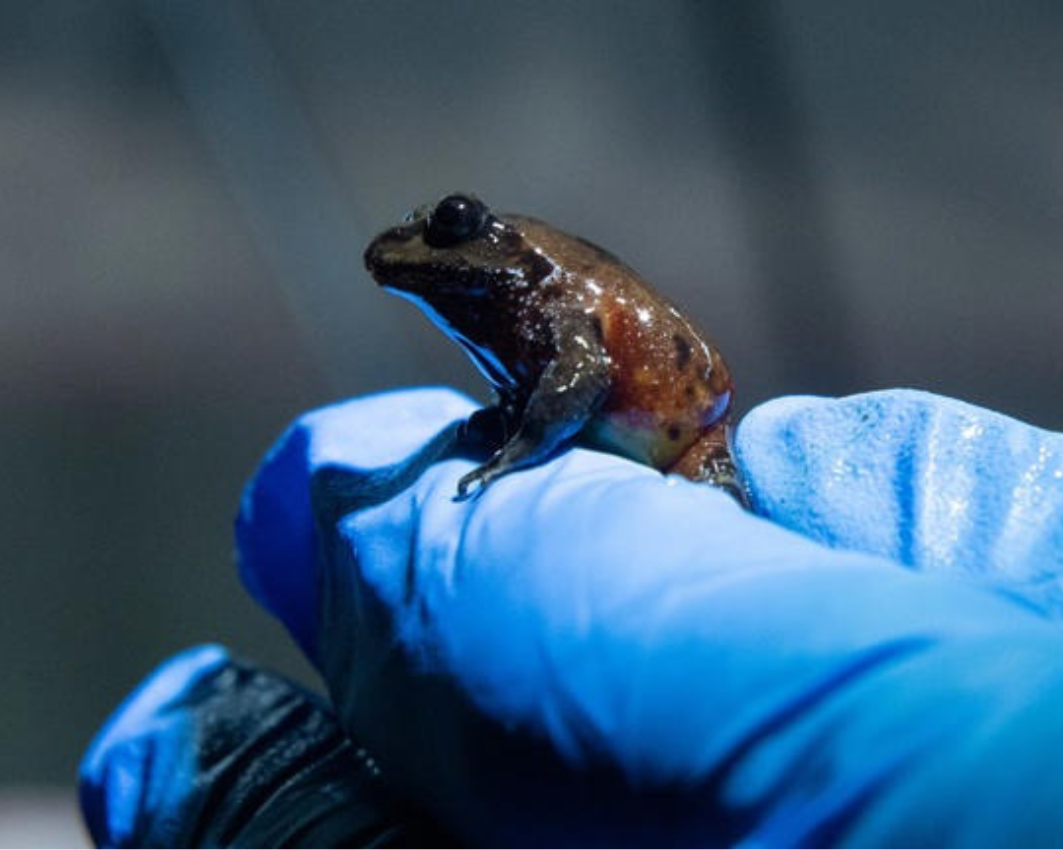
Image credit: Southern Cross University, 2025
What makes this breeding so special?
Mountain frogs have an unusual life cycle. They lay a small number of eggs inside burrows dug in moist, muddy stream banks rather than in open water. Instead of free-swimming tadpoles, the entire development happens within the egg: the "tadpoles" feed on yolk supplied inside the egg, bypassing a swimming stage entirely. They then metamorphose into tiny froglets about 2–3 mm long. These frogs are extremely delicate in their early stages, and in this case, it took about four years for them to grow to reproductive maturity under captive conditions.
The frogs are highly dependent on persistent moisture, cool temperatures, and the process known as 'cloud stripping' that keeps these areas humid. Because they can't move far, habitat loss and climate change have impacted them harshly.
Fires during the Black Summer of 2019–2020 destroyed large swathes of habitat, and feral pigs pose an ongoing threat, destroying frog populations quickly. But with protective measures such as trapping and fencing in key areas — and now this successful captive breeding and reintroduction — there is renewed hope.
This release isn't just a scientific achievement; it's a sign that our forested mountains can still recover if we commit and work together. The frog's survival hinges on ongoing vigilance: caring for land, minimizing threats, supporting research, and protecting climate-resilient patches of rainforest. But this moment reminds us: extinction is forever, but conservation, when done well, works.
Your gift today helps protect vital rainforest habitat for threatened species.