Climate Change and Rainforests: How Protecting Trees Is Part of the Solution
Climate change can feel like an impossibly big problem, one that gets solved in parliaments and international summits, far away from anything an individual can influence. But some of the most effective climate action is already happening on the ground, in places like the Daintree Lowland Rainforest, one square metre at a time.
Rainforests are not just a casualty of climate change. They are one of the most powerful tools we have for winding back its effects, and protecting them is something everyone can be part of.
Why rainforests matter for climate action
Tropical rainforests are sometimes called the lungs of the planet, and while that description undersells just how complex these ecosystems are, it captures something true: rainforests absorb enormous volumes of carbon dioxide from the atmosphere and lock it away in trees, roots and soil.
The Daintree is a particularly remarkable example. Its the oldest continuously existing rainforest in the world, a living museum of plant life that has been evolving for over 120 million years. Species found here, like the ancient Green Dinosaur tree (Idiospermum australiense), are living connections to a time before flowering plants existed anywhere else on the planet.
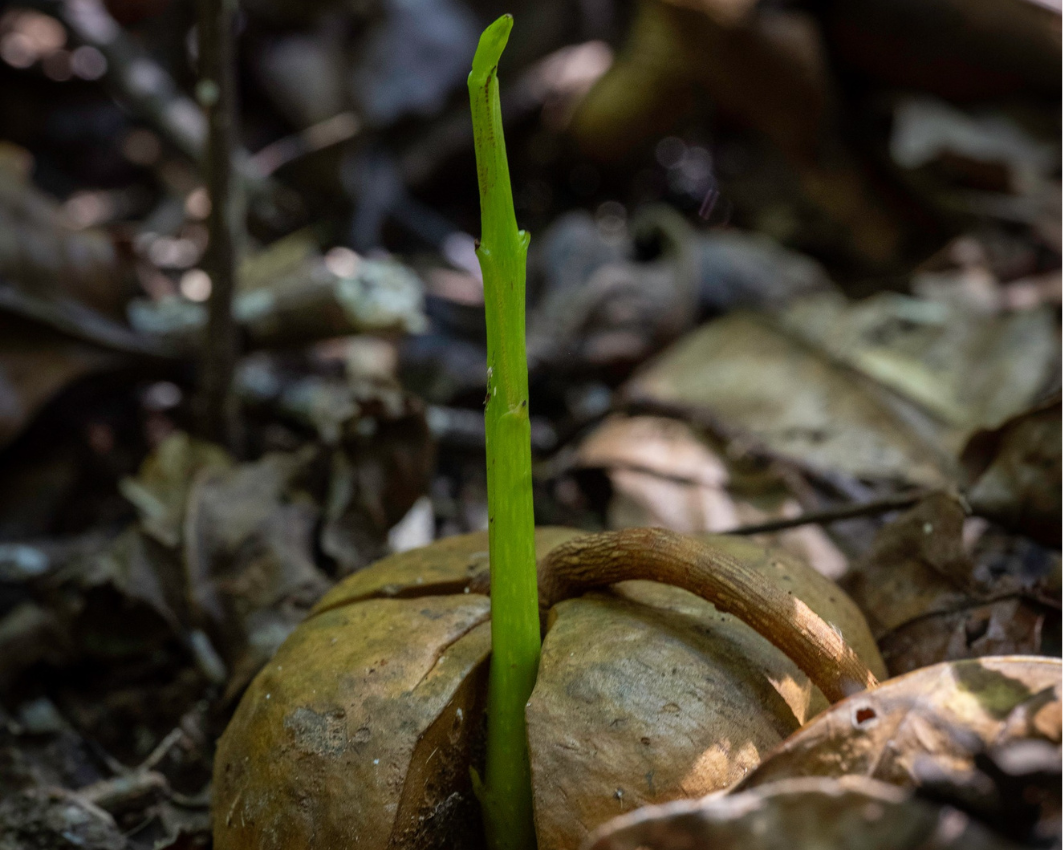
The ancient Green Dinosaur (Idiospermum australiense). Image: Steven Nowakowski
When a mature rainforest is cleared, all of that stored carbon is released. When a cleared block is left to regenerate or is actively restored, the opposite happens: carbon is drawn back down and stored again, while habitat, water systems and biodiversity are rebuilt alongside it.
This is why reforestation and forest restoration projects are consistently ranked among the most cost-effective solutions to climate change available today. Trees do the work; we just need to give them the land, and the time, to do it.
How reforestation fits into the bigger climate picture
There is no single solution to climate change; it will take a combination of reducing emissions, shifting to renewable energy, changing how we use land, and protecting the ecosystems that already do the work of drawing carbon out of the atmosphere.
Forest restoration sits firmly in that last category, and it comes with advantages other climate solutions don't: it can start today, on land that already exists, using techniques that are already well understood. Planting trees for climate change mitigation also delivers benefits far beyond carbon. Restored rainforest supports threatened wildlife such as the Southern Cassowary and Bennett's tree-kangaroo, protects waterways, and helps stabilise the broader ecosystems that surrounding farmland and communities rely on.
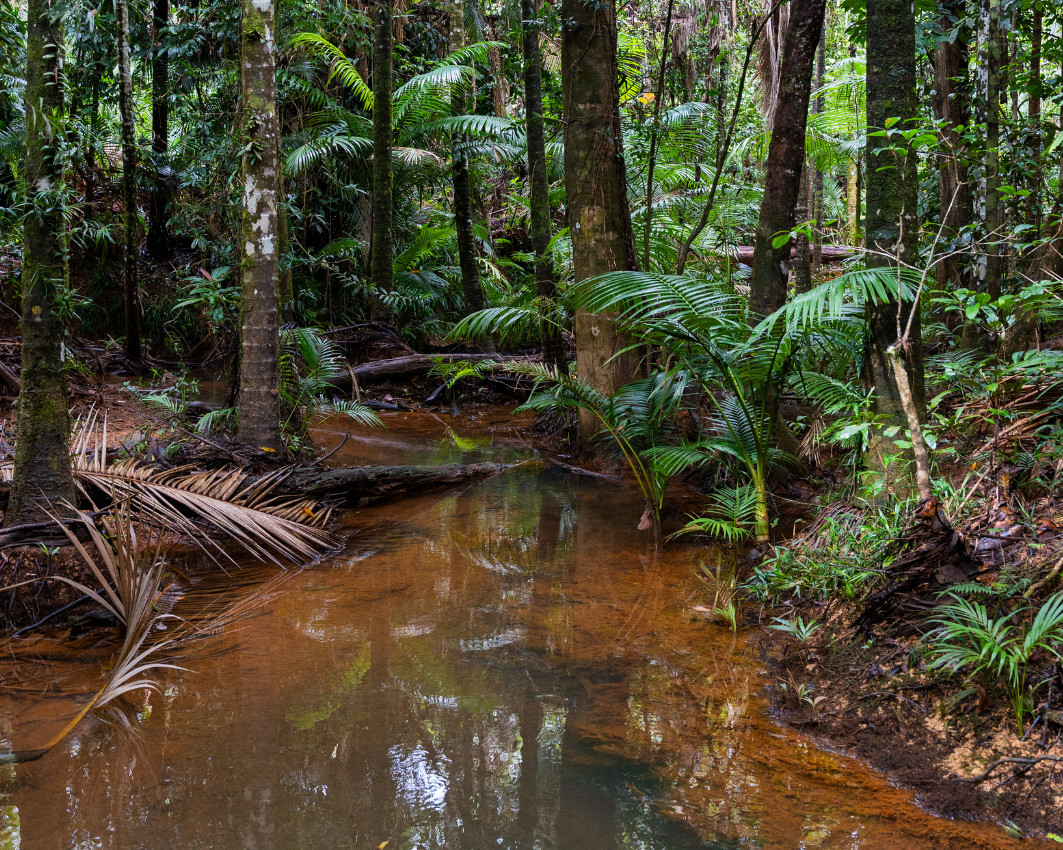
Waterways of Lot 2 Old Forest Creek Road in the Daintree Rainforest.
That combination, proven, immediate and multi-benefit, is part of why forest protection features in almost every credible answer to the question of how to stop climate change, from the Intergovernmental Panel on Climate Change through to grassroots conservation groups working block by block.
The Daintree: a rainforest under real pressure
The Daintree Lowland Rainforest is under a very specific threat. In 1982, a subdivision created 1,136 private freehold lots across this ancient landscape, small blocks of rainforest that can legally be cleared for development at any time. Today, an estimated 130 of those freehold properties remain at risk.
Every property that is cleared doesn't just remove trees from the map. It fragments habitat corridors, releases stored carbon, and permanently changes an ecosystem that took millions of years to form. Every property that is protected does the reverse, it keeps carbon locked away, restores a functioning piece of rainforest, and reconnects habitat for species that depend on continuous forest cover to survive.
This is the model Gondwana Rainforest Trust was built around: buying back at-risk freehold lots before they can be cleared, then protecting them forever on a Pathway to Protection towards the highest level of protection available.
What protecting a rainforest actually achieves
To date, Gondwana Rainforest Trust, through our Save the Daintree Program, has purchased and protected 36 rainforest properties, and ten of those properties have already been transferred into Daintree National Park (CYPAL), returning that land to permanent protection.
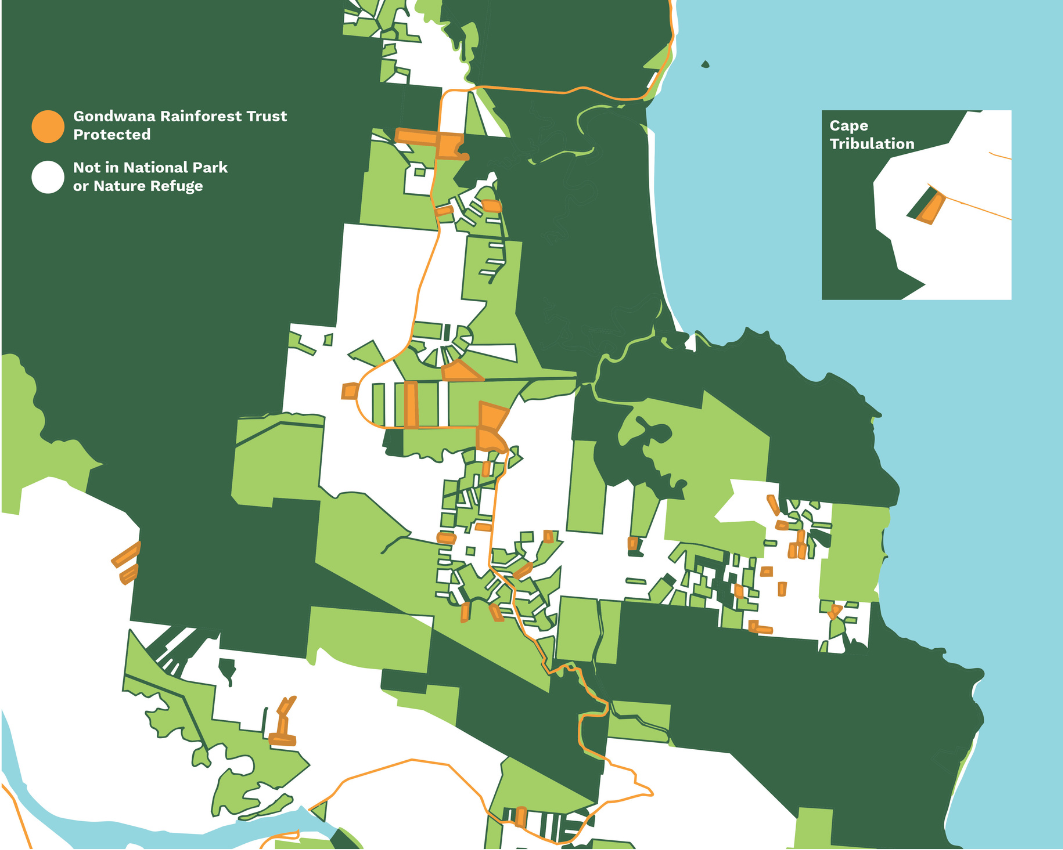
The 36 properties purchased for conservation in the Daintree Rainforest.
Each property purchased is one less block at risk of clearing, one more corridor reconnected for wildlife, and one more piece of long-term carbon storage secured. It is climate action that is measurable, permanent and visible, not a pledge for 2050, but rainforest protected today.
How you can be part of the solution
Climate change solutions don't have to be abstract. Gondwana Rainforest Trust exists to purchase, protect and restore endangered rainforests — permanently removing them from the risk of clearing and keeping their carbon, habitat and biodiversity intact. Protecting an existing rainforest is one of the fastest, most direct forms of climate action available, because the hard work of drawing down carbon has already been done by the forest itself. Our job is simply to make sure it stays standing.