The Important Role of Regenerative Tourism
For years, sustainable tourism has encouraged visitors to minimise harm—use fewer resources, leave no trace, and support local businesses. But as climate change and biodiversity loss accelerate, simply doing less damage is no longer enough. We need tourism that actively restores and improves the places we visit.
This is where regenerative tourism comes in—travel that leaves destinations better than they were before. In rainforest ecosystems and other high-value natural landscapes, this begins with restoration, conservation, and a deeper connection to place.
Beyond Sustainability: Tourism That Gives Back
Traditional eco-tourism focuses on reducing negative impacts. Regenerative tourism goes further. It actively contributes to ecological health, cultural integrity, and community wellbeing through every visitor experience.
In practice, this can include:
- Restoring degraded land through reforestation and ecosystem repair
- Embedding Traditional Ecological Knowledge into land management and visitor experiences
- Supporting authentic, community-led cultural tourism
- Ensuring tourism revenue contributes to long-term environmental outcomes
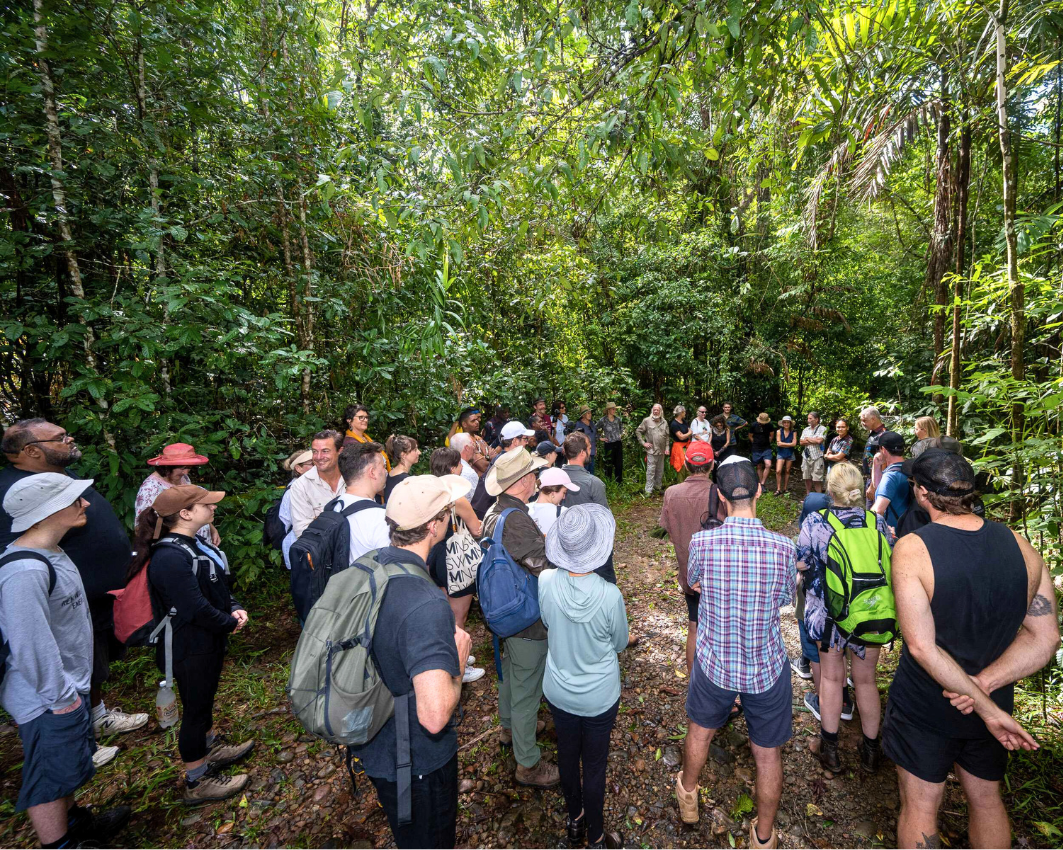
Regenerative tourism tour in the Daintree.
A Model for High-Value Natural Landscapes
Many globally significant ecosystems are well positioned to lead the shift towards regenerative tourism. These landscapes often combine strong visitor interest with a history of environmental pressure or fragmentation.
In these contexts, regenerative tourism provides a pathway to:
- Repair past environmental damage
- Strengthen ecological connectivity
- Enable culturally-led land management
- Create meaningful visitor experiences grounded in restoration and stewardship
As outlined in the organisation’s broader strategy, long-term conservation outcomes depend on integrating restoration, partnerships, and community engagement into scalable models .
Creating Opportunities for Communities and Traditional Owners
Regenerative tourism creates practical opportunities for local communities and Traditional Owners to lead and benefit from conservation outcomes:
Employment and Skills Development
- Land management, restoration, and ranger programs
- Nursery operations, seed collection, and propagation
- Tourism services including guiding, education, and accommodation
Cultural Revitalisation
- Strengthening connection to Country through restoration
- Sharing knowledge through guided experiences and storytelling
- Reviving language and cultural practices
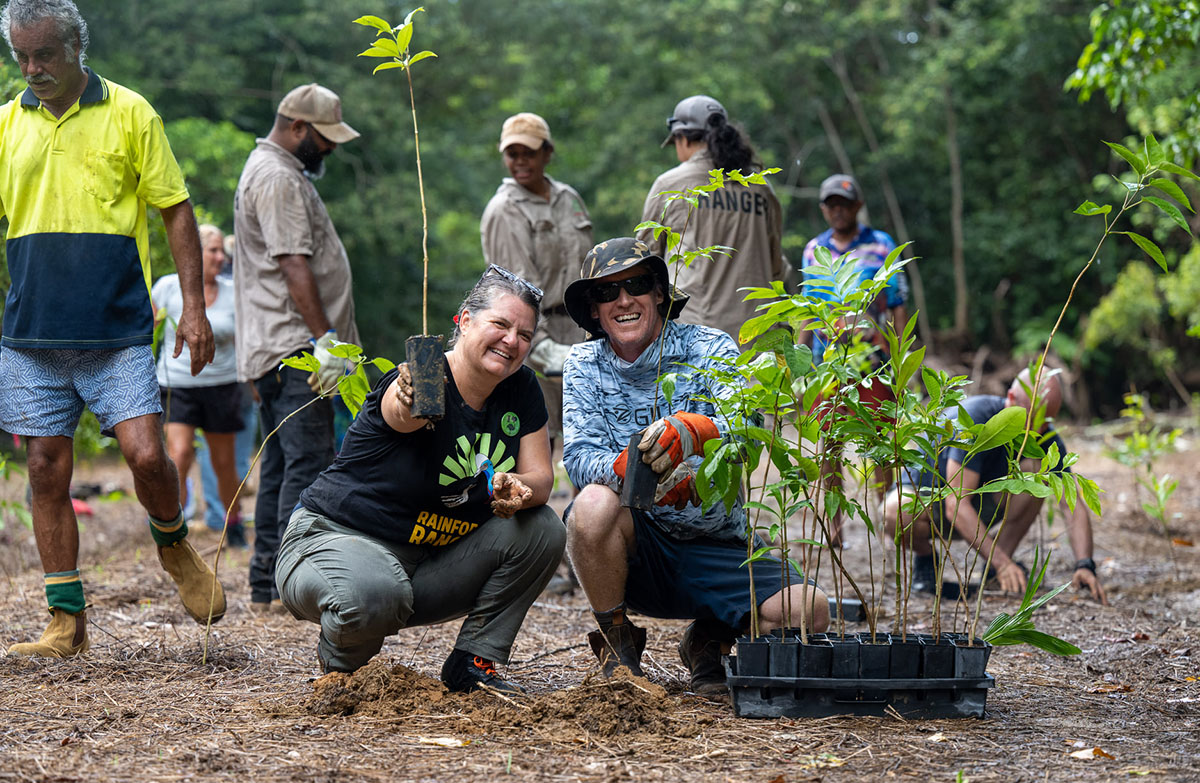
Regenerative Tourism in action in the Daintree.
Economic Resilience
- Diversified income streams through tourism, conservation programs, and nature-based enterprises
- Increased demand for meaningful, ethical travel experiences
How the Regenerative Tourism Model Works
At its core, regenerative tourism creates a reinforcing cycle:
- Visitors contribute to conservation through experiences and fees
- Tourism builds awareness of biodiversity and cultural values
- Partnerships strengthen between communities, conservation groups, and operators
- Landscapes are actively restored and protected
- Visitor experiences improve as ecosystems recover
This model aligns closely with broader conservation strategies that integrate funding, engagement, and on-ground impact into a single system .
A Global Opportunity
Regenerative tourism has the potential to reshape how people experience and interact with nature worldwide. By positioning conservation and cultural leadership at the centre of tourism, it offers a scalable model that can be adapted across regions and ecosystems.
This is not just about individual destinations—it is about redefining tourism as a force for restoration rather than extraction.
From Vision to Reality
Regenerative tourism is already emerging in many regions. Every restored hectare, every community-led initiative, and every visitor who chooses to support restoration contributes to this shift.
The model is simple but powerful:
- Conservation provides the foundation
- Community and cultural leadership provide authenticity
- Visitor engagement provides sustainable funding
Together, they create tourism that does more than sustain—it regenerates.
Travel That Gives Back
The future of tourism lies not in taking from places, but in contributing to their recovery and long-term health.
By choosing experiences that support restoration, visitors become part of something meaningful—helping protect biodiversity, strengthen communities, and restore ecosystems for future generations.
This is tourism with purpose. This is travel that gives back.
The Daintree: A Perfect Case Study
The Daintree, one of Goandwana Rainforest Trust's conservation project areas is uniquely positioned to lead the regenerative tourism movement. As a World Heritage site attracting millions of visitors annually, it has global recognition and influence. Yet it also carries the scars of historical damage—1,136 freehold blocks were subdivided in the 1980s, creating a legacy of habitat fragmentation.
The Cape York Peninsula Aboriginal Land (CYPAL) tenure resolution provides Traditional Owners with land rights and joint management agreements, creating the perfect framework for culturally-led regenerative tourism experiences. Our restoration work proves that degraded land can become thriving rainforest again—providing the foundation for tourism experiences centered on healing Country.